[This is a web-ified version of the latest version of the club constitution, provided for convenience. The definitive version in Word (boo!) format is available on request.]
Chesterton Rowing Club
Constitution and Rules
1. NAME
1.1. The club shall be known as Chesterton Rowing Club hereinafter known as the Club
1.2. The Club is affiliated to the ARA and CRA.
2. OBJECTIVES
2.1. The objectives of the Club are to promote a wider participation and interest in the sport of rowing in the Cambridge area.
3. MEMBERSHIP
3.1. The following are eligible for membership:
· Membership is open to any person at the discretion of the committee.
· If the club accepts a membership application from any junior, i.e. a person under 18 years of age, the committee shall immediately review its structure and procedures to comply with recommendations set out in the “Child Protection Procedures in Rowing” as published by the ARA”
· Classes of Membership:
· Rowing members
· Temporary members*
· Social, coaching and coxing members
NB: *Temporary Members can be designated as such by any committee member, or by those members responsible for organising an outing, for the purposes of competition, training or recreation. Temporary membership will be held for the duration of the outing only.
3.2. Election:
Candidates for election to membership shall submit a completed membership form to the Membership Secretary. The power of election shall rest with the committee, who may refuse to elect to membership any applicant without assigning a reason for doing so.
3.3. Acceptance:
The committee may at its sole discretion, decline to accept renewal of membership, from any person, without disclosing the reason.
4. EQUAL OPPORTUNITIES POLICY
The Club shall endeavour to ensure that the talents and resources of all members are utilised to the full and that no member receives less favourable treatment on the grounds of sex, disability marital status, creed, social class, colour, ethnic group, age or sexual orientation or is disadvantaged by conditions or requirements which cannot be shown to be relevant to performance.
5. ENTRANCE FEE
5.1. There is no entrance fee. New members shall be charged the applicable subscription rate, adjusted pro-rata for the remainder of the membership year.
6. SUBSCRIPTION
6.1. The rates of subscription shall be determined by a simple majority of the committee and shall be due on election, and thereafter on or before 1 January in every year.
7. CESSATION OF MEMBERSHIP
7.1. Any members may resign without notice
7.2. Any member may be expelled by a quorate meeting of the committee, held with due notice
7.3. Any member who has been expelled by the committee may appeal by instructing the Honorary Secretary to call an Extraordinary General Meeting, which shall decide whether or not to reinstate the member, and whether or not to repay any part of the member’s subscription.
7.4. A member shall be deemed to have resigned from the Club if, after due notice, he/shall has not paid the annual subscription by the renewal date. He/she may, however, rejoin at any time during the year by paying the full annual membership fee, subject to the provision of 3.3 above.
8. SPONSORSHIP
8.1. No rowing kit bearing the name of SIMOCO shall be worn in any Chesterton Rowing Club outings, on the Cam or elsewhere, or in boathouses on the Cam, or in the vicinity of Cambridge boathouses.
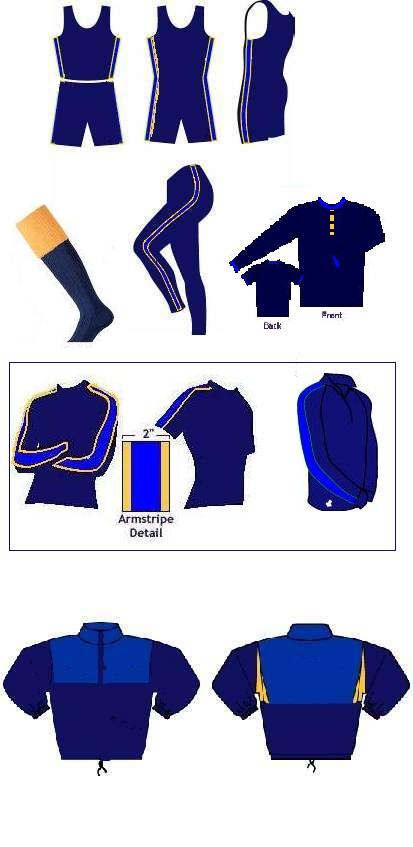
8.2. Race kit is to be worn for all races on or off Cam, if it has been issued to a member by the Kit Secretary (see paragraph 10.11). Race kit is as described on the club website.
8.3. The Club expects it members to behave responsibility at all times. Members shall not bring the Club or its sponsors into disrepute whilst involved in Club outings and races on or off the Cam.
9. COMMITTEE
9.1. Only members entitled to vote are eligible to hold office. Only paid-up members are entitled to vote at meetings.
9.2. The committee shall conduct the affairs of the Club as a whole and shall consist of at least three members sharing the following offices:
9.2.1. Club Captain
9.2.2. Men’s Captain
9.2.3. Women’s Captain
9.2.4. Honorary Secretary
9.2.5. Membership Secretary/Treasurer
9.2.6. Race Secretaries
9.2.7. Head Coach
9.2.8. Water Safety Advisor
9.2.9. Equipment Officer
9.2.10. Webmaster
9.2.11. Kit Secretary
9.2.12. Funding Secretary
9.2.13. Social Secretary
9.2.14. Crew Captains – non-voting member
9.3. Any committee member holding more than one office shall have one vote. The committee shall have the power to co-opt further members and co-opted members shall have the right to vote at committee meetings.
9.4. Nominations for the position of Captain, Honorary Secretary, Treasurer and other Officers shall be put forward in the form of a motion under the terms of Rule 11.5
9.5. The term of office for elected officers shall be for one year, and members shall be eligible for re-election.
9.6. The committee may at any time request an independent examination of the Club accounts.
10. DUTIES OF COMMITTEE
10.1. Club Captain:
· The Club Captain shall be responsible for guiding the activities of the Club in accordance with its general policy as expressed by the majority of its members.
· The Club Captain shall represent or arrange for the representation of the Club at ARA regional level, CRA delegates’ meeting, and at meetings of other organisations.
· The Club Captain shall ex officio be a member of any other committee of the Club.
· The Club Captain shall have the ultimate responsibility for deciding which individuals shall row in each crew and for what crews are formed.
10.2. Men’s Captain:
· The Men’s Captain shall be responsible for formation and development of the men’s crew in consultation with the Head Coach.
· The Men’s Captain shall help with and promote the selection of Men’s crew captains.
10.3. Women’s Captain:
· The Women’s Captain shall be responsible for formation and development of the women’s crews in consultation with the Head Coach.
· The Women’s Captain shall help with, and promote, the selection of women’s crew captains.
10.4. Honorary Secretary:
· The Honorary Secretary shall be responsible for the organisation of meetings of the committee and of the Club, and the recording of minutes relating to such meetings and all correspondence relating to the general business of the Club.
· The Honorary Secretary shall provide a point of contact for general ARA correspondence.
10.5. Membership Secretary/Treasurer:
· The Membership Secretary/Treasurer shall be responsible for processing membership applications and renewals, shall ensure that membership forms are correctly filed in, and shall provide membership figures for the ARA membership declaration.
· The Membership Secretary/Treasurer shall be responsible for collection of all membership fees, and for payment of these into the Club’s bank account.
· The Membership Secretary/Treasurer shall keep such books of account as required by the General Meeting.
· The Treasurer shall prepare the books annually and shall produce at the AGM accounts showing the financial state of the Clubs.
10.6. Race Secretary:
· The Race Secretary shall process all racing entries from Crew Captains and scullers, so that the Club can submit race entries in a co-ordinated way. While a single Race Secretary is preferred, not more than two Race Secretaries can cooperate to perform these duties.
· At the Race Secretary’s discretion, and in consultation with the Treasurer, the Club’s bank account may be used to pay all crew entries together for any event, in which case the Race Secretary is responsible for ensuring that the Crew Captains recover entry fees from the rowers and pay these back to the Club. A levy may be applied to any race fees paid via the Club’s bank account to cover interest and risk of default, as agreed by the committee.
10.7. Head Coach:
· The Head Coach shall advise on coaching related matters.
10.8. Water Safety Advisor:
· The Water Safety Advisor is responsible for keeping the Club up to date with ARA guidelines and regulations on water safety and for ensuring that this information is disseminated within the Club. The Water Safety Advisor shall keep such safety records as are required by the ARA.
10.9. Equipment Officer:
· The Equipment Officer shall be responsible for maintaining equipment in a safe and serviceable condition.
· The Equipment Officer shall be responsible for all contractual arrangements between the Club and other parties, particularly but not exclusively hire of rack space, hire of equipment, hiring out of the Club’s equipment.
· The Equipment Officer shall be responsible for insuring the Club’s equipment and ensuring that the Club is covered for public liability.
10.10. The Webmaster:
· The Webmaster shall be responsible for insuring the Club’s website and other electronic services, such as mailing lists, online boat booking etc.
10.11. Kit Secretary:
· The Kit Secretary shall be responsible for design and procurement of racing kit for the Club and for the issue of T shirts showing the name of the sponsor to all new Club members.
10.12. Funding Secretary:
· The Funding Secretary shall be responsible for finding means to improve the Club’s income. These may include sponsorship, fund-raising events, sports events etc as approved by the committee.
10.13. Social Secretary:
· The Social Secretary shall be responsible for identifying social events which should encourage socialising between crews and groups within the Club and between Clubs.
10.14. Crew Captains:
· Any number of Crew Captains may be co-opted onto the committee. Crew Captains shall organise crew outings and provide the Race Secretary with accurate details of crews, preferred entry status and preferred division times. Crew Captains shall recover race fees from rowers in their crews, on behalf of the Race Secretary.
11. COMMITTEE MEETINGS
11.1. The committee is responsible for the general conduct of the Club’s business and activities.
11.2. The committee shall meet during the year, as required by the business to be transacted.
11.3. Special meetings of the committee shall be called by the Honorary Secretary on instructions from the Club Captain, or not less than three committee members.
11.4. A quorum shall consist of not less than three officers who have been elected at a general meeting.
11.5. In the case of casual vacancy among the committee, the said committee shall be entitled to appoint another eligible person to act until the next AGM.
11.6. Not less than seven clear days’ notice shall be given of a committee meeting, such notice being sent to all current committee members.
12. GENERAL MEETING
12.1. Fully paid up members of any category shall be entitled to vote at General Meetings. Non-members, and former members whose subscription has lapsed, shall not be entitled to vote.
12.2. An Annual General Meeting shall be held in the autumn of each year. There shall be laid before the meeting a statement of accounts made up to the 30 September immediately preceding.
12.3. An Extraordinary General Meeting shall be called on the instructions of a simple majority of the committee or on a requisition signed by not less than 3 members of the Club entitled to vote.
12.4. Not less than 21 clear days notice shall be given, specifying to all members the time and business of the General Meeting.
12.5. At any General Meeting, a resolution put to the vote of the Meeting shall be decided by a show of hands of those entitled to vote, except when more than one nomination has been received for a position on the committee, in which case voting will be by secret ballot. In the event of a tie, the result shall be decided by postal ballot of all paid-up members.
12.6. At all General Meetings, the Club Captain shall preside or in his or her absence, a Chairman for the meeting will be elected from the committee by the voting members present.
12.7. At all General Meetings not less than five members of the Club entitled to vote shall constitute a quorum.
12.8. Absences of quorum: If after half an hour from the time appointed for the meeting, a quorum is not present, the Meeting, if called at the request of the members, shall be dissolved. In any other case, the meeting shall be adjourned until a time and place to be fixed by the committee. If a quorum is not present within half an hour from the time appointed for an adjourned meeting, the members present shall be a quorum.
12.9. Accidental Omission: Accidental Omission to give notice of a meeting to, or the non-receipt of notice of a meeting by any members shall not invalidate the proceedings of a meeting.
12.10. Election of men’s and women’s captains: only men shall be entitled to vote for the men’s captains only women shall be entitled to vote for the women’s captain.
12.11. Where one member holds more than one committee post, that member shall only be entitled to one vote.
13. LIABILITY
The committee shall manage the affairs of the Club. Financial or legal liability incurred in the rightful exercise of their office shall not however be the personal liability of the committee but shall be the responsibility of the Club as a whole.
14. ALTERATION OF CONSTITUTION
14.1. This constitution shall be altered amended or rescinded except by a General Meeting of the Club.
14.2. A resolution to give effect to a change must be passed by at least 75% of the members present at the General Meeting, and voting on this behalf.
15. DISTRIBUTION
In no circumstances can any profit be distributed to members. All profits generated must be used in furthering the objectives of the Club.
16. TERMINATION
The Club shall not terminate except by a resolution of a Special General Meeting convened for the purpose and, in such an event, any surplus assets shall be handed over to a body or bodies with similar objectives to a charity or charities agreed by the meeting which formally terminates the Club.
17. POWER OF DECISION
Any matter not provided for in this constitution or any question over the interpretation of it shall be dealt with by the committee whose decision shall be final.
18. SAFETY
The committee shall appoint a member to act as Water Safety Advisor whose duty it will be to understand the requirements of the ARA Code of Practice for Water Safety and advise on their prominent display, their observation and their implementation at all times.
19. DECLARATION
All members shall be required to sign a membership form which shall include a declaration of any applicable health problems, and which shall be kept by the Membership Secretary. Any relevant health problems may be communicated with officers of the Club and to coaches as necessary to ensure the safety of rowers.
20. VALIDITY
This constitution replaces any previous version of the constitution or POR documents [CW1] and is the only document applicable to the Club.
Approved at the Annual General Meeting, September 22nd 2011.
Signed by (Club Captain) ...................................... [Christopher Wood]
[CW1]For review, intention not clear.